Author

Search Engine Optimization (SEO) is one of the most important digital marketing skills for anyone who wants to grow a website, online business, personal brand, or career. SEO helps search engines understand your website and helps potential customers discover your content through organic search.
For beginners, SEO can seem complicated because it includes many different techniques. The easiest way to understand SEO is to divide it into three major areas: Technical SEO, On-Page SEO, and Off-Page SEO. Learn with George Simte
In this beginner’s guide, we will explain each area and show you how they work together. Technical SEO On-Page Off-Page SEO Guide
What Is SEO?
SEO is the process of improving a website so that it can appear more prominently in search engine results for relevant searches. SEO course in Lamka
For example, a digital marketing institute in Lamka may want to rank for searches such as:
- Digital marketing course in Lamka
- SEO course in Churachandpur
- Digital marketing course in Manipur
- Learn SEO in Lamka
- Ecommerce course in Manipur
A strong SEO strategy combines technical improvements, high-quality content, keyword optimization, and authority-building activities.
1. What Is Technical SEO?
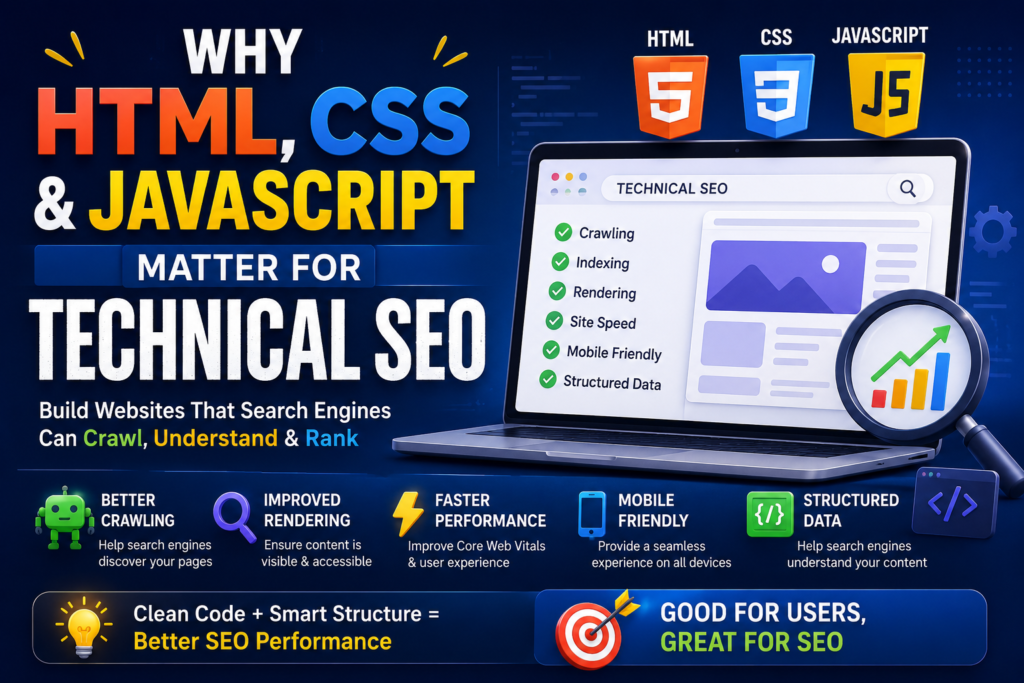
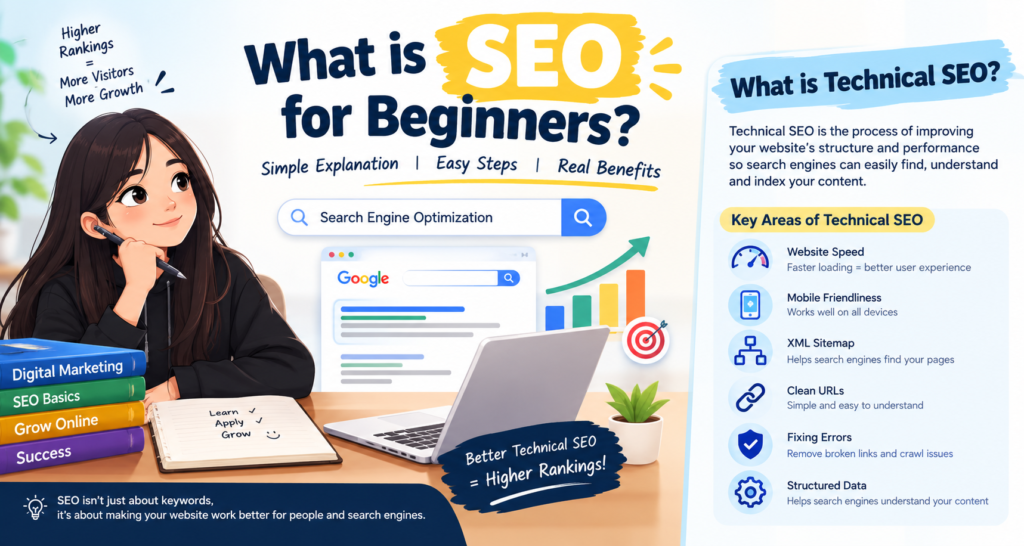
Technical SEO focuses on improving the technical foundation of your website. It helps search engines crawl, understand, and index your webpages efficiently.
You do not necessarily need to be a professional programmer to learn the basics of Technical SEO.
Important Technical SEO areas include: Technical SEO On-Page Off-Page SEO Guide
Website Speed
A slow website can create a poor user experience. Optimize images, reduce unnecessary scripts, use caching, and choose reliable hosting to improve loading performance.
Mobile-Friendly Design
Many users access websites through smartphones. Your website should have responsive layouts, readable text, easy navigation, and buttons that work properly on mobile devices. Technical SEO On-Page Off-Page SEO Guide
HTTPS Security
Your website should use HTTPS so that communication between the visitor and website is encrypted. Make sure your SSL certificate is correctly installed.
XML Sitemap
An XML sitemap helps search engines discover important pages on your website. For WordPress websites, SEO plugins can generally help generate and manage sitemaps.
Robots.txt
The robots.txt file provides instructions to search engine crawlers about which areas of a website they can or cannot crawl.
Website Structure
Create a logical website structure where important pages can be reached through clear navigation and internal links.
Core Web Vitals
Pay attention to page-loading experience, responsiveness, and visual stability. Improving these areas can contribute to a better user experience.
2. What Is On-Page SEO?
On-Page SEO focuses on optimizing the content and elements that appear on your webpages.
The goal is to make your content useful to visitors while helping search engines understand the topic.
Keyword Research
Start by identifying the phrases your target audience searches for.
For example, if you provide digital marketing training in Lamka, relevant keywords could include:
“digital marketing course in Lamka” and “SEO course in Manipur.”
Avoid stuffing keywords repeatedly into your content. Use keywords naturally and focus on satisfying the searcher’s intent.
SEO Title
Create a clear and attractive title that explains what the page is about.
For example:
Technical SEO, On-Page SEO & Off-Page SEO Guide for Beginners
Meta Description
Write a useful description that summarizes the page and encourages users to click from search results.
Headings
Use headings such as H1, H2, and H3 to organize your content. Your main topic should have a clear H1, while supporting topics can use H2 and H3 headings.
URL Optimization
Keep URLs short, descriptive, and relevant.
For example:
example.com/technical-seo-guide
is generally easier to understand than a URL containing random numbers and characters.
Internal Linking
Link relevant pages within your website. For example, an SEO blog post can link to your SEO course, digital marketing course, or related articles.
Internal links help visitors discover more content and help search engines understand relationships between pages.
Image SEO
Optimize images by using descriptive file names and appropriate alt text. Compress large images to improve page performance. Technical SEO On-Page Off-Page SEO Guide
3. What Is Off-Page SEO?
Off-Page SEO refers to activities performed outside your website that can help build your website’s authority, reputation, and visibility.
Backlinks
A backlink is a link from another website to your website. High-quality, relevant backlinks can help strengthen your site’s authority.
However, beginners should focus on quality and relevance rather than simply collecting hundreds of backlinks.
Local SEO
For local businesses, optimize your Google Business Profile, maintain consistent business information, collect genuine customer reviews, and build relevant local citations.
For example, a business serving Lamka and Churachandpur can create content specifically addressing local customer needs.
Content Promotion
Share useful articles through appropriate social platforms, communities, newsletters, and other legitimate channels. The objective is to attract real visitors and potential links.
Digital PR
Publishing useful research, expert insights, case studies, or original information can help attract mentions and links from other websites.
Technical SEO vs On-Page SEO vs Off-Page SEO
Think of SEO as building a house.
Technical SEO is the foundation.
On-Page SEO is the structure and useful content inside the house.
Off-Page SEO is the reputation and connections that help people discover and trust the house.
All three areas should work together.
Simple SEO Strategy for Beginners
If you are just starting SEO, follow this simple process:
Step 1: Research relevant keywords.
Step 2: Create useful content that answers the searcher’s question.
Step 3: Optimize your page title, headings, URL, images, and internal links.
Step 4: Improve website speed and mobile usability.
Step 5: Submit and monitor your website using appropriate search engine tools.
Step 6: Promote your best content and build genuine relationships for relevant mentions and backlinks.
Step 7: Monitor rankings, organic traffic, clicks, and conversions.
SEO is not a one-time activity. Search behavior, competitors, content, and search engine systems continue to change, so regularly review and improve your strategy.
Learn SEO for Jobs and Business
Learning Technical SEO, On-Page SEO, and Off-Page SEO can give beginners a strong foundation in digital marketing.
If you are a student, job seeker, freelancer, business owner, or content creator in Lamka, Churachandpur, or Manipur, practical SEO training can help you develop skills for websites, local businesses, ecommerce stores, and digital marketing campaigns.
At Ad Campaign Academy – Lamka, learners can explore practical digital marketing and SEO skills alongside areas such as Google Ads, Meta Ads, WordPress, ecommerce, analytics, AI marketing tools, and content marketing.
The key to becoming good at SEO is not simply memorizing techniques. Learn the fundamentals, practice on real websites, measure results, and keep improving.