Author
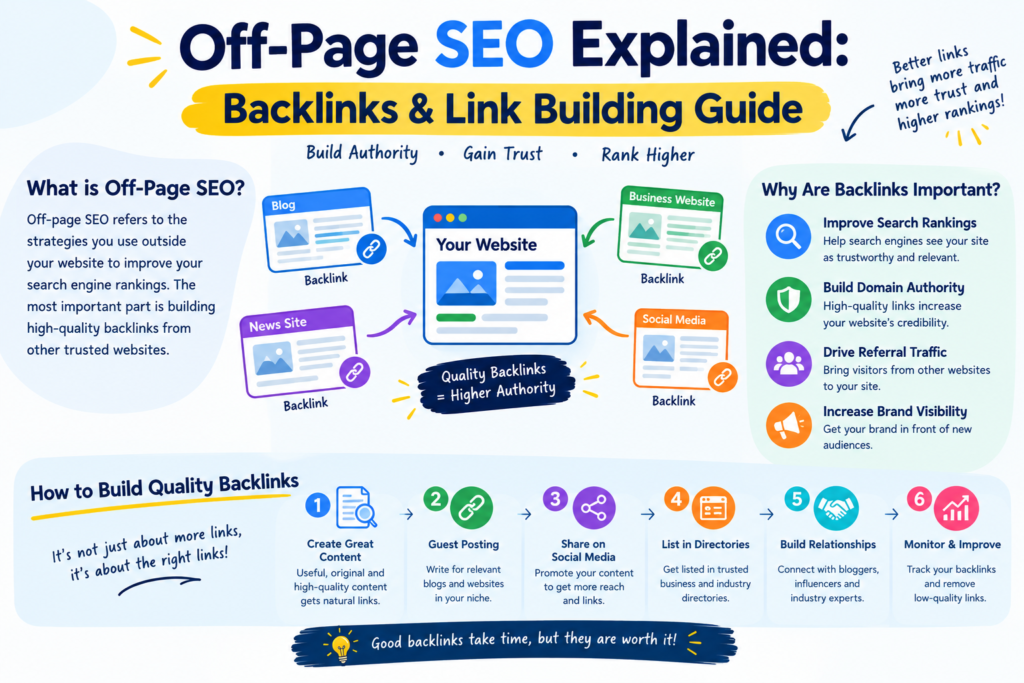
Off-page SEO is an important part of Search Engine Optimization that happens outside your website. While on-page SEO focuses on your content and webpages, off-page SEO focuses on building your website’s reputation, authority, visibility, and relationships across the internet.
For beginners, the easiest way to understand off-page SEO is this: on-page SEO tells Google what your website is about, while off-page SEO can help demonstrate that other websites and people recognize your website as useful and trustworthy.
Off-page SEO includes activities such as earning backlinks, digital PR, local citations, guest posting, brand mentions, and building relationships with relevant websites.
Backlinks Explained: What Are Backlinks and Why Do They Matter?
A backlink is a link from another website to your website.
For example, imagine you publish an article about SEO. Another relevant website finds your article useful and links to it as a resource. That link is a backlink.
Backlinks can help search engines discover pages and understand relationships between websites. Links from relevant, reputable websites can also contribute to your site’s authority.
However, not every backlink has the same value. A natural link from a trusted and relevant website is generally more useful than hundreds of irrelevant or low-quality links.
The goal of link building should therefore be quality, relevance, and natural acquisition, rather than simply collecting as many links as possible.
DoFollow vs NoFollow Links: Beginner’s Guide
You may have heard the terms dofollow and nofollow when learning about backlinks.
A normal link can allow search engines to follow the link and potentially consider it as part of their understanding of the relationship between pages.
A nofollow link includes a specific HTML attribute that tells search engines not to treat the link as a typical editorial endorsement.
There are also other link attributes, including sponsored for paid or sponsored links and ugc for links within user-generated content.
For beginners, the important lesson is not to focus exclusively on getting “dofollow” links. A healthy online presence can include different types of links, mentions, citations, and references.
The best approach is to earn links because your content or business is genuinely useful.
How to Build Quality Backlinks Safely
Building quality backlinks starts with creating something worth linking to.
You can create:
- Helpful guides
- Original research
- Statistics and studies
- Useful tutorials
- Free tools or resources
- Infographics
- Industry reports
- Detailed educational content
Once you create valuable content, promote it to relevant websites, organizations, communities, and professionals who may genuinely find it useful.
Another effective approach is digital PR. If your business has a useful story, original research, new service, community project, or expert insight, relevant publications may choose to mention your brand.
You can also identify broken or outdated resources on relevant websites and suggest a useful replacement when appropriate.
Avoid buying large numbers of backlinks, participating in link schemes, automatically generating links, or using unrelated websites simply because they offer links. These approaches can create long-term SEO problems.
Guest Posting for SEO: Beginner’s Guide
Guest posting means writing an article for another website.
For example, an SEO professional could write an educational article about digital marketing for a relevant business or industry publication. The article may include an appropriate author bio or contextual reference to the writer’s website.
Guest posting can be useful when it is primarily about sharing expertise and reaching a relevant audience.
When choosing guest-post opportunities, consider:
- Website relevance
- Audience quality
- Editorial standards
- Genuine traffic and engagement
- Website reputation
- Content quality
Avoid publishing the same article on many websites or contributing to websites created mainly to sell backlinks.
The best guest posts provide genuine value to the host website’s audience.
Local SEO and Citations: How Local Businesses Can Get Found
Local SEO is especially important for businesses that serve customers in a specific geographic area.
A local citation is a mention of a business’s information, often including its name, address, phone number, website, or other business details.
For example, a local business in Lamka or Churachandpur can build visibility by maintaining accurate business information across relevant local directories, business websites, industry directories, and other trustworthy platforms.
Businesses should also maintain an accurate Google Business Profile and encourage genuine customer reviews.
Consistency is important. Your business name, address, phone number, website, and other important information should be accurate across major platforms. Learn digital marketing in LAMKA
Local SEO is not only about backlinks. It is about helping search engines and potential customers understand who you are, what you offer, and where you serve customers.
Link Building Mistakes Beginners Should Avoid
Many beginners assume that more backlinks automatically mean better rankings. That is not how modern SEO should be approached.
Here are some common mistakes to avoid.
Buying backlinks in bulk: Cheap backlink packages can contain irrelevant or low-quality links.
Using irrelevant websites: A link from a completely unrelated website may provide little meaningful value.
Keyword-stuffed anchor text: Repeatedly forcing exact-match keywords into backlinks can look unnatural.
Automated link building: Automatically generating large numbers of links can create spam signals.
Private link schemes: Networks created primarily to manipulate rankings can violate search-engine spam policies.
Ignoring content quality: Backlinks cannot replace useful, well-structured content.
Focusing only on links: Brand visibility, reputation, local presence, content, reviews, and genuine relationships also matter.
A sustainable SEO strategy focuses on earning recognition rather than manipulating search engines.
On-Page SEO vs Off-Page SEO vs Technical SEO: What’s the Difference?
These three areas work together but have different purposes.
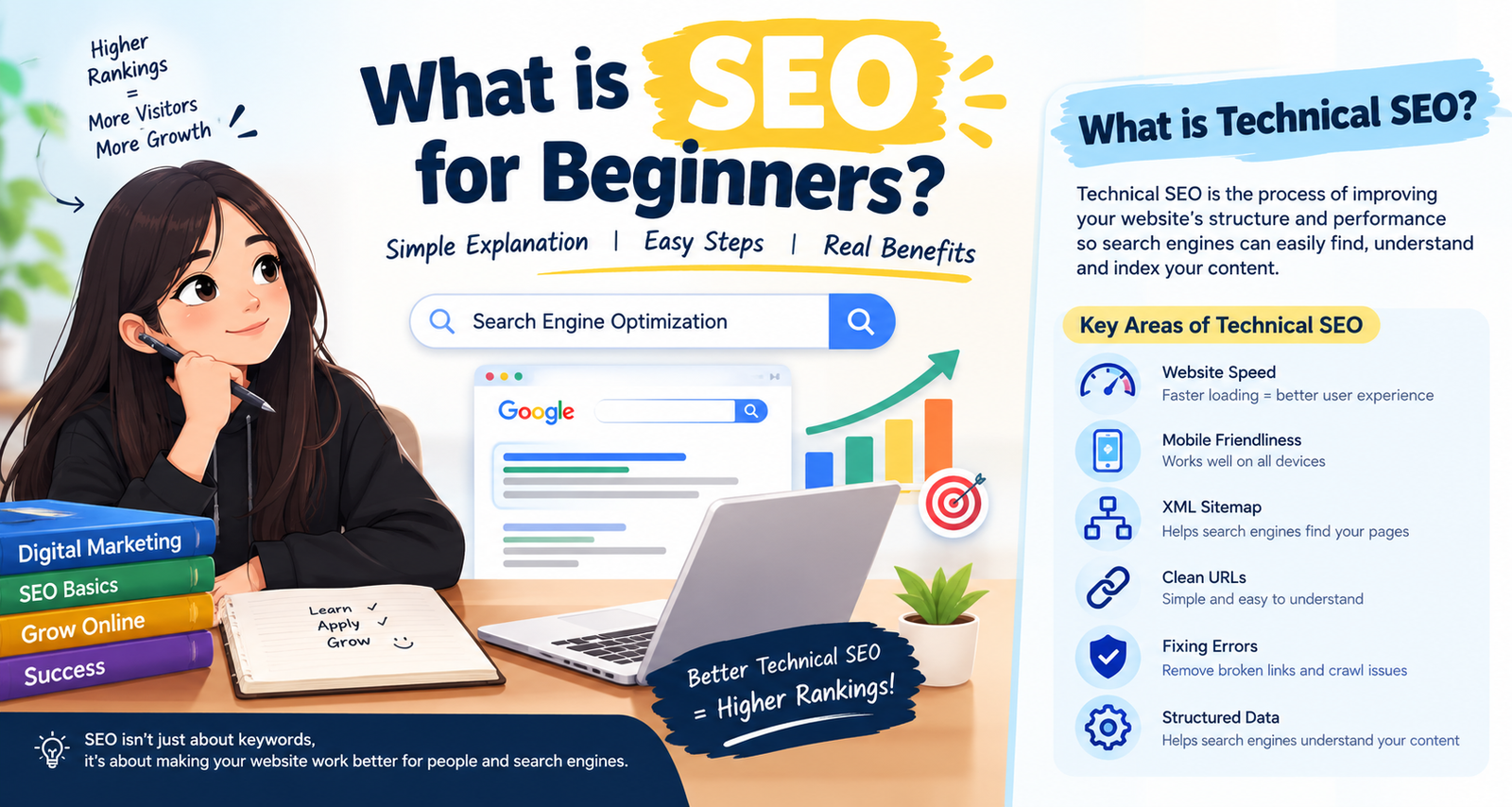
On-page SEO focuses on what is available on your webpages. This includes titles, headings, content, keywords, internal links, images, URLs, and search intent.
Off-page SEO focuses on signals and activities outside your website. Examples include backlinks, digital PR, brand mentions, citations, and relationships with relevant websites.
Technical SEO focuses on your website’s technical foundation. This includes crawling, indexing, site architecture, mobile usability, page performance, HTTPS, structured data, XML sitemaps, and other technical elements. SEO MASTERY COURSE
Think of SEO like building a business.
On-page SEO = what you say.
Technical SEO = how well your website works.
Off-page SEO = how your website is recognized across the wider web.
You need all three for a strong SEO foundation.
Why Off-Page SEO Matters for Beginners
Off-page SEO can help your website become more discoverable, build credibility, attract referral traffic, and develop authority within your industry.
For a local business, this could mean being mentioned by local organizations, industry websites, news publications, directories, and community resources.
For a blogger or content creator, it could mean other websites referencing their guides and research.
For an ecommerce business, it could include product reviews, relevant publications, partnerships, and digital PR.
The strategy depends on your industry, audience, location, and goals.
Final Thoughts
Off-page SEO is much more than simply building backlinks. It is about building your website’s reputation and earning genuine recognition from relevant people, websites, organizations, and communities.
Beginners should focus on creating useful content, developing relationships, maintaining accurate local business information, earning relevant mentions, and building quality backlinks naturally.
Remember: one relevant, trustworthy backlink can be more valuable than hundreds of low-quality links.
If you combine strong on-page SEO, a technically healthy website, useful content, and sustainable off-page SEO, you can build a stronger foundation for long-term organic search visibility.
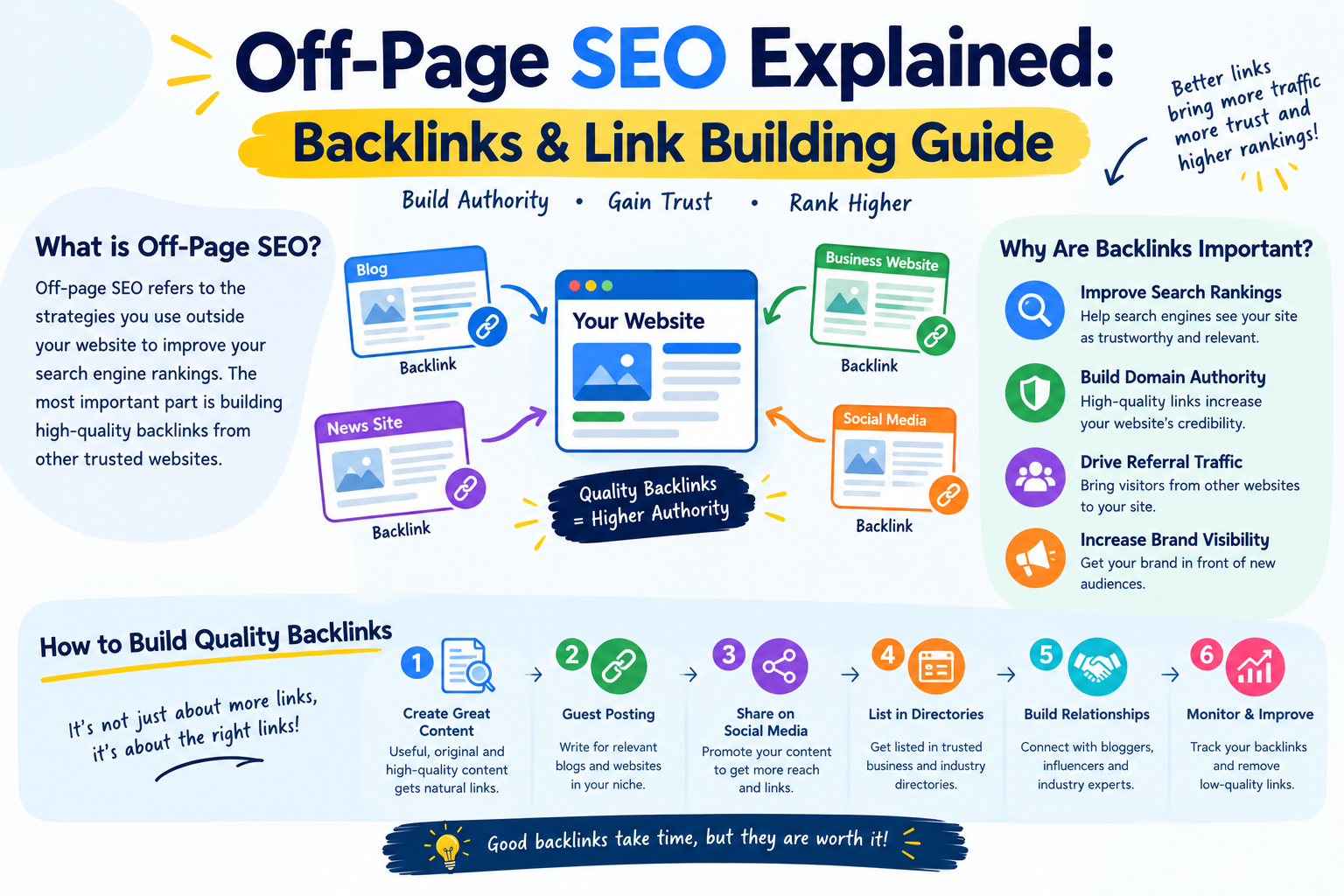
Off-Page SEO Explained: Complete Beginner’s Guide
Off-page SEO is an important part of Search Engine Optimization that happens outside your website. While on-page SEO focuses on…

Technical SEO, On-Page SEO and Off-Page SEO Guide for Beginners
Search Engine Optimization (SEO) is one of the most important digital marketing skills for anyone who wants to grow a…
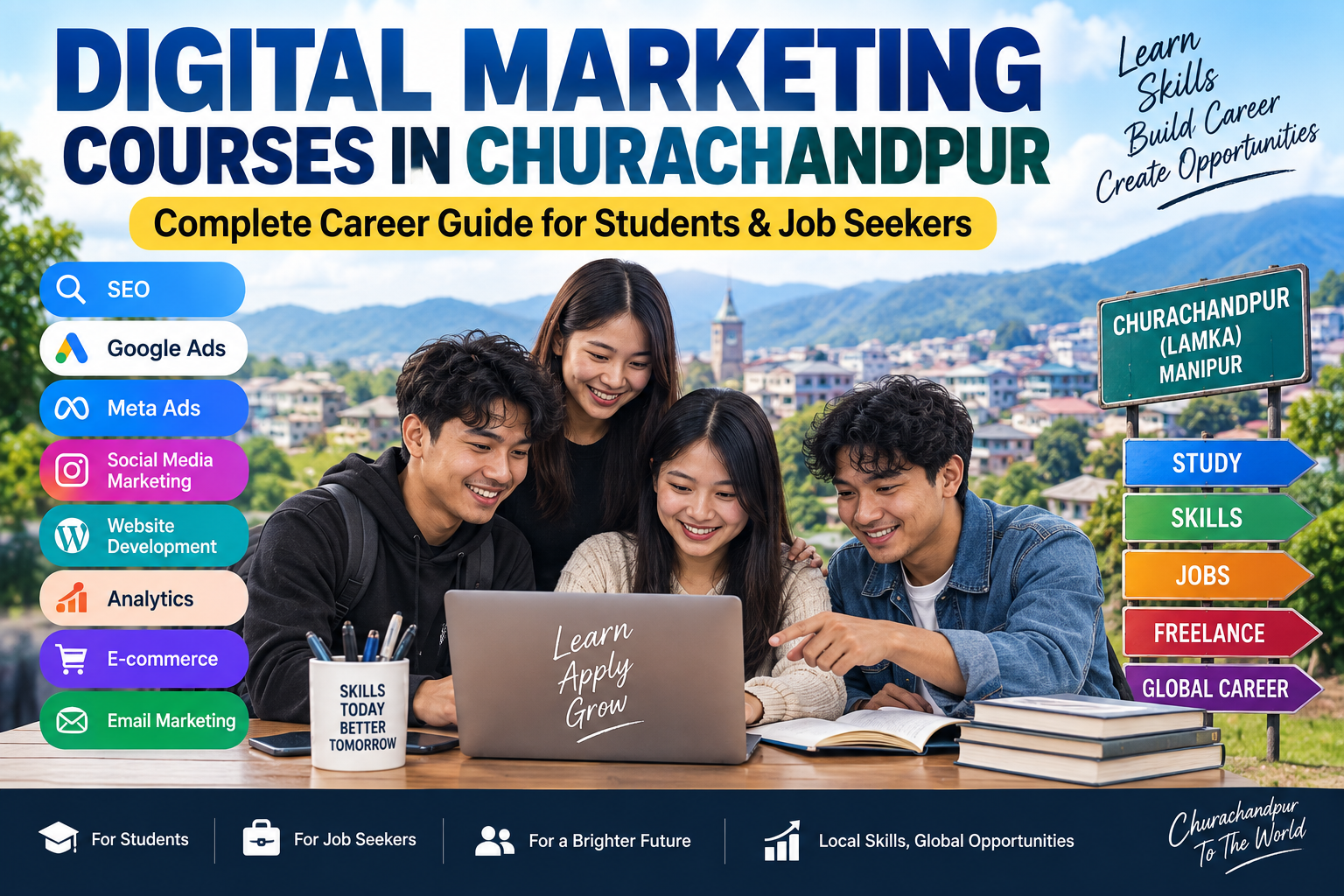
Digital Marketing Courses in Churachandpur: Complete Career Guide for Students
Digital marketing has become one of the most valuable career skills for students, job seekers, business owners, and content creators….
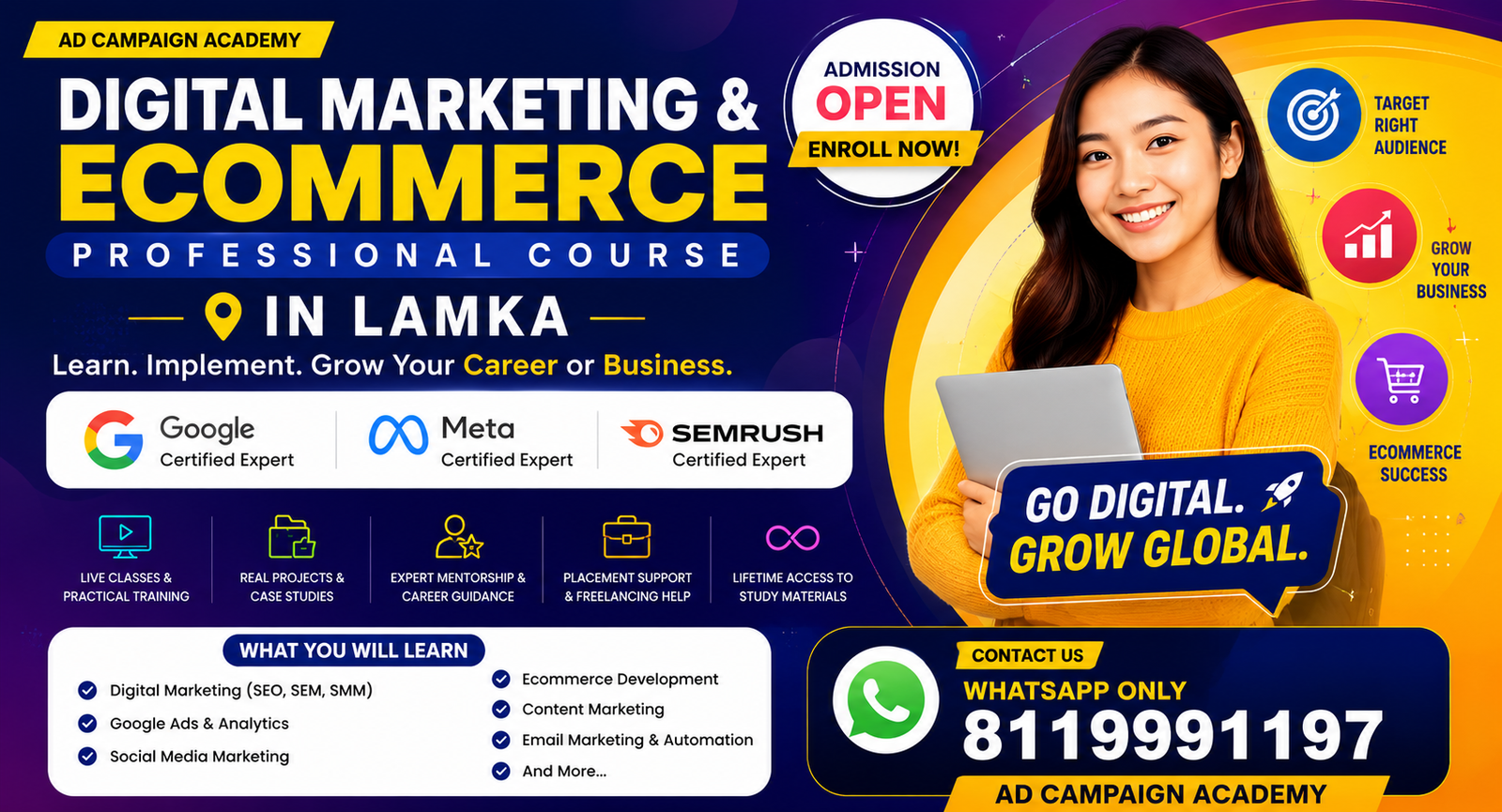
Advanced Digital Marketing Course in Manipur: Build Job-Ready Skills with
Digital marketing has become an important skill for businesses, entrepreneurs, content creators, and professionals around the world. Companies increasingly use…
Affordable Digital Marketing Course in Lamka, Manipur – Learn with
Affordable digital marketing course in Lamka Manipur, Digital marketing has become one of the most valuable skills for students, job…
Ad Campaign Academy Admission Open for 10 Days – Get
Learn Professional Digital Marketing & E-commerce Skills Ad Campaign Academy is now accepting admissions for a limited 10-day enrollment period! If…
Table of Contents
7 FAQ Questions for the Article
1. What is off-page SEO?
Off-page SEO is the process of improving a website’s reputation, authority and visibility through activities outside the website, including backlinks, digital PR, brand mentions and local citations.
2. What are backlinks in SEO?
Backlinks are links from another website to your website. Relevant and trustworthy backlinks can help search engines discover content and understand relationships between websites.
3. What is the difference between dofollow and nofollow links?
A normal link can be considered by search engines as part of their understanding of the relationship between pages. A nofollow link uses a specific attribute that tells search engines not to treat the link as a typical editorial endorsement.
4. How can beginners build quality backlinks?
Beginners can build quality backlinks by creating useful content, publishing original research, earning digital PR mentions, contributing genuine guest posts, building industry relationships and promoting valuable resources to relevant websites.
5. Is guest posting good for SEO?
Guest posting can support SEO when it involves high-quality, original content published on relevant websites for a genuine audience. It should not be used primarily to manipulate search rankings through large-scale or low-quality link building.
6. What are local SEO citations?
Local SEO citations are online mentions of a business’s information, such as its name, address, phone number, website or other business details. Accurate citations can help businesses establish local visibility.
7. What is the difference between on-page SEO, off-page SEO and technical SEO?
On-page SEO focuses on webpage content and elements such as titles, headings and internal links. Off-page SEO focuses on activities and signals outside the website, such as backlinks and brand mentions. Technical SEO focuses on the website’s technical foundation, including crawling, indexing, site architecture and performance.
- Off-Page SEO Explained: Complete Beginner’s Guide
- Technical SEO, On-Page SEO and Off-Page SEO Guide for Beginners
- Digital Marketing Courses in Churachandpur: Complete Career Guide for Students & Job Seekers
- Advanced Digital Marketing Course in Manipur: Build Job-Ready Skills with ACA Lamka
- Affordable Digital Marketing Course in Lamka, Manipur – Learn with ACA-Lamka

Ad campaign academy
Lamka – Manipur
“Ad Campaign Academy – Lamka is a great place to learn digital marketing through practical training. The mentors explain every topic clearly and provide valuable guidance in SEO, Google Ads, Meta Ads, ecommerce, and online business. Highly recommended for career-focused learners.”